
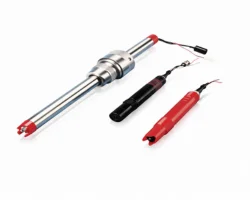
ABB TBX567 High-Pressure In-Line pH/ORP Sensor
The ABB TBX567 is a high-pressure in-line pH/ORP sensor built for tough process duties—rugged construction, long service life, and stable measurement in demanding industrial lines.
- A 316 stainless steel outer sleeve protects the sensor in the line.
- The measuring part is housed in a strong Ryton (PPS) body.
- Double O-ring sealing helps prevent leakage and supports stable operation in pressurized service.
Specifications
(Technical values vary by exact configuration; below are the commonly specified TB(X)567 family values.)
- Up to 200 psi (1380 kPa) at 140°C
- Up to 250 psi (1725 kPa) at 100°C
- Outer sleeve: 316 stainless steel
- Electrode body: Ryton (PPS)
- Sealing: double O-ring (Viton on external seals)
- Junction options: wood or PTFE, flush junction style
- In-line threaded body: 1″ NPT (typical configuration)
- Conduit ports on junction box: 3/4″ NPT (typical)
- PH glass options (standard/high-temp options depending on selection)
- ORP electrode options (platinum or gold depending on selection)
Benefits
- Suitable for high-pressure in-line use where general pH probes are not ideal
- Rugged mechanical build (stainless sleeve + double sealing) for harsh plant conditions
- Stable pH/ORP measurement through solid reference design (configuration dependent)
- Choice of pH or ORP options so one sensor family fits multiple measurement needs
- Better measurement confidence for critical lines due to self-checking configuration (TBX567 type)
Why Choose
- When pressure is the challenge: it’s built for pressurized process lines where common probes fail early.
- When mechanical durability matters: stainless protection + industrial sealing reduces breakage and leakage risk.
- When you want stable results over time: the reference system is designed for demanding service where drifting and poisoning are common issues.
- When you need pH OR ORP: one product family covers both measurement types depending on your configuration.
FAQ
1) What is ABB TBX567 used for?
It’s used for in-line pH or ORP measurement in pressurized process lines, where high pressure capability is required.
2) What is the pressure rating of ABB TBX567 pH sensor?
Typical family ratings include 200 psi at 140°C and 250 psi at 100°C (depends on application limits and configuration).
3) Is ABB TBX567 a pH sensor or ORP sensor?
It can be configured as pH or ORP depending on the electrode version selected.
4) What is the difference between ABB TBX567 and TB567?
TBX567 is commonly specified as the self-checking variant (solution ground feature).
5) What process connection does ABB TBX567 use?
Common configurations use 1″ NPT inline mounting (confirm based on your installation hardware).
6) Which junction type should I choose—PTFE or wood?
Selection depends on the process: PTFE is often chosen for dirtier/fouling service; wood is used in certain cleaner or standard process conditions. Share your application fluid for the safest match.
Reviews
There are no reviews yet.